
Guides · Sun 08 Nov 2026
Outlying island day trips: Cheung Chau, Lamma and Tai O, three islands and three very different days out
Hong Kong's easiest escape is a ferry pier in Central. Cheung Chau gives you a car free fishing island of temples, caves and seafood lanes; Lamma gives you a village to village walk ending at a seafood waterfront; and Tai O, on Lantau, gives you stilt houses over the tidal channels and pairs with the Big Buddha in the territory's best single day out. How to choose between them, how each day runs, and the ferry and bus practicalities that make them work.
Hong Kong's skyline is the postcard, but the city's best day trips leave from the same waterfront the postcard is taken from. Along the Central piers, ferries run all day to the outlying islands, and within the hour the towers give way to fishing harbours, temple lanes and beaches with no cars at all. There are dozens of islands; three of them carry almost every visitor day trip, and they are not versions of each other. Cheung Chau is the lively one, a small island living at full volume. Lamma is the walker's island, two villages joined by a family trail. Tai O is the old fishing village on Lantau's far western shore, and it comes with the Big Buddha attached. Here is how to choose, and how each day runs when you do.
First, the piers: how the islands work
Everything starts at the Central Ferry Piers, a short walk from Hong Kong Station and the IFC. Sun Ferry sails from Pier 5 to Cheung Chau, running both fast ferries, about 35 to 40 minutes, and ordinary ferries, about 55 to 60 minutes, through the day. Hong Kong and Kowloon Ferry sails from Pier 4 to Lamma, to two different villages: Yung Shue Wan in about 25 minutes and Sok Kwu Wan in about 35 to 40 minutes. Tai O is the exception that proves the geography: it sits on Lantau, the biggest island, and there is no Central ferry to it. You reach it by bus across Lantau, which is exactly why it pairs with the Big Buddha, as the Tai O section below sets out. Pay with an Octopus card at the piers, check the operator's timetable for your day rather than trusting any printed one, including ours, and remember that Sunday and holiday sailings are busier and priced differently from weekday ones. Fares on all three routes are modest; the mistake that costs people their day is not the fare, it is taking the wrong pier home.
Cheung Chau: the island at full volume
Cheung Chau is the day trip for people who want their island busy. The ferry lands you on a waterfront promenade lined with seafood restaurants and bicycle hire stands, on an island with no cars, where the transport is walking and rented bikes and the lanes are sized for both. Start at Pak Tai Temple, a short walk north along the waterfront: the island's guardian temple, home of the Bun Festival each spring, covered in our Cheung Chau Bun Festival guide. Then let the lanes feed you. Cheung Chau eats in snacks: giant curry fishballs on skewers, mango mochi, baked buns from the festival bakeries, and a seafood lunch on the promenade when you are ready to sit down. In the afternoon, walk or ride south to Cheung Po Tsai Cave, the narrow rock cleft named for the pirate said to have hidden his treasure there, and to Tung Wan, the island's main beach, for a swim or an hour of doing nothing. Stay for an early seafood dinner and the island gives you its best light, then the promenade walk back to the pier is ten minutes of harbour and lanterns.
If you would rather have the island explained as you go, the guided version is the tour this site already wires to its Cheung Chau listings: a walking tour of the island taking in Pak Tai Temple, Cheung Po Tsai Cave and Tung Wan beach, with a dim sum lunch and the ferry crossings handled for you.
Book a Cheung Chau island tourvia Viator · affiliate link
Lamma: walk from lunch to lunch
Lamma is the day trip built around one walk. Sail from Pier 4 to Yung Shue Wan, the island's main village: a waterfront, a main street of cafes, bookshops and dried seafood stores, and a Tin Hau temple at its heart. Coffee and a wander first, then take the Lamma Island Family Trail south. The paved path climbs gently past Hung Shing Yeh Beach, the village's swimming beach about twenty minutes in, crosses the island's green spine with views back to Hong Kong Island and out to sea, passes the Kamikaze Caves cut into the shore near the far end, where Japanese forces are said to have hidden speedboats in the Second World War, and drops into Sok Kwu Wan after about an hour and a half of walking. Sok Kwu Wan is one long row of seafood restaurants on stilts over the water, and it is the correct place for lunch: pick your fish live from the tanks, have it steamed with ginger and spring onion, and eat it looking at the harbour you just walked over. The day's small genius is the return: Sok Kwu Wan has its own pier and its own ferry back to Central, so the walk never has to be walked backwards. Families with small children can skip the trail entirely and still have the day: Yung Shue Wan, the beach, and the ferry home is a complete trip on its own.
Tai O: the fishing village, with the Big Buddha attached
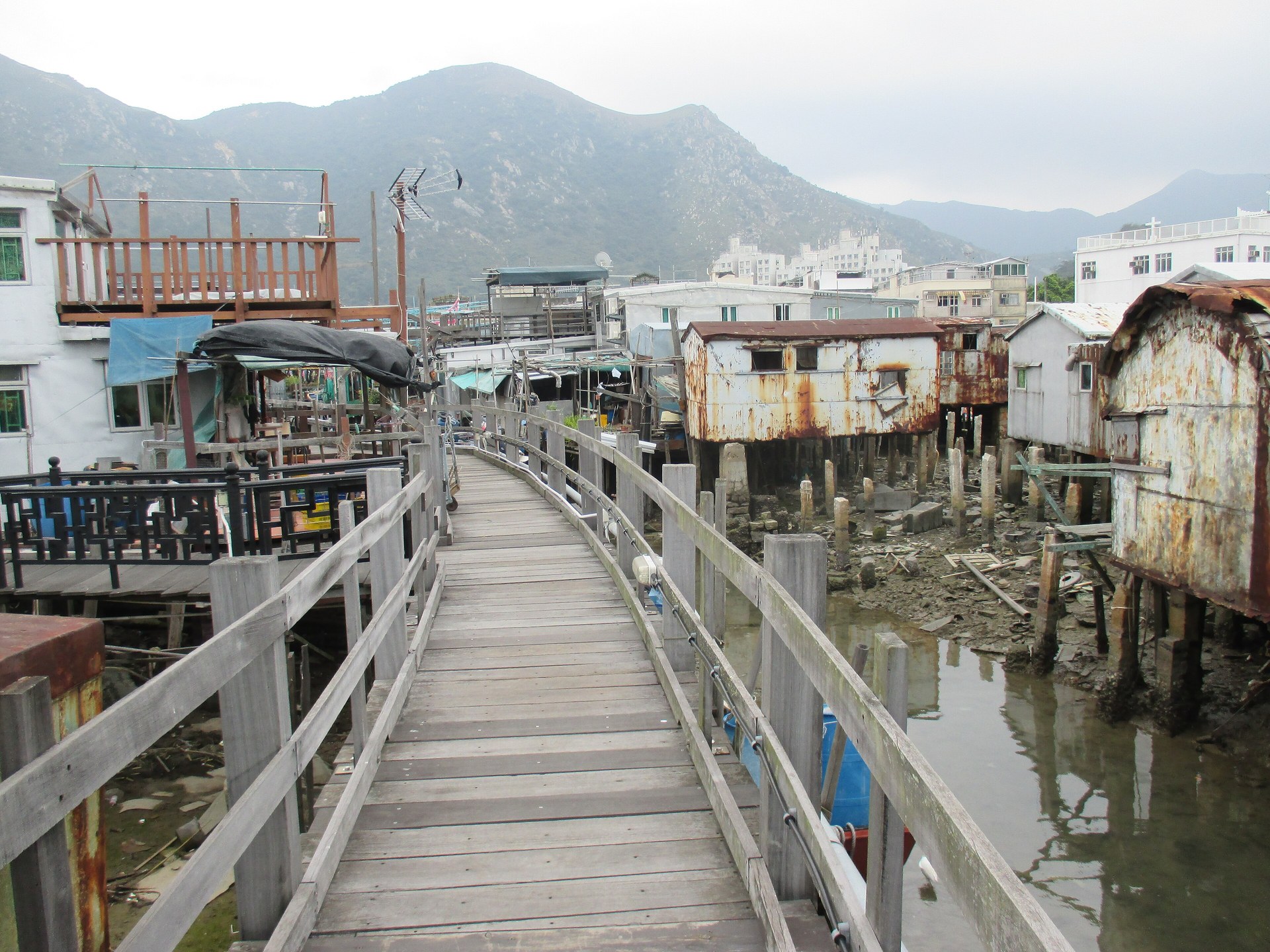
Tai O is the day trip for people who think they have seen Hong Kong. The village stands at Lantau's western end, where the Tanka fishing families built their homes as pang uk, stilt houses standing over the tidal channels, linked by wooden boardwalks: the hero photograph above is that boardwalk, rust, mudflats and all, and the village still smells of the sea and of its famous shrimp paste drying in the sun. Walk the boardwalks, cross the drawbridge, browse the dried seafood and shrimp paste shops on Wing On Street, and take one of the small boats from the waterfront for a loop through the stilt house channels and out along the coast; the boats look for the Chinese white dolphins that live in these waters, and seeing them is luck, never a promise. The Tai O Heritage Hotel, the old marine police station on the headland, is the village's elegant footnote and a good tea stop.
The way to build the day is the classic Lantau loop, and it starts with the Buddha. Take the MTR to Tung Chung, then the Ngong Ping 360 cable car, a 25 minute ride over the hills to Ngong Ping village: the Tian Tan Big Buddha above it, 34 metres of bronze up a flight of 268 steps, and Po Lin Monastery across the square, are covered on our attractions page. From Ngong Ping, New Lantao Bus route 21 runs down to Tai O in about twenty minutes. Do the Buddha in the morning, Tai O for lunch and the afternoon, then bus route 11 from Tai O back to Tung Chung and the MTR home. It is the fullest day in this guide and the one people remember longest, so start it early and check the cable car's operating notices before you set out, because high winds can pause it and the bus becomes the way up.
Which island, and where to sleep
Choose Cheung Chau for energy, snacks and a swim, and for a first island day with children. Choose Lamma for the walk and the long seafood lunch. Choose Tai O for the village that feels furthest from the city, and for the day that also takes in the Big Buddha. All three reward a weekday and punish nobody on a Sunday except at the pier queues, so arrive at Central early on weekends and holidays. Stay on Hong Kong Island near Central, or in Tsim Sha Tsui with the Star Ferry across to the piers, and every island in this guide is a morning decision rather than a plan.
Stay in Hong Kongvia Trip.com · affiliate link
More reading on the articles page, or go straight to the events calendar.