
Guides · Fri 20 Nov 2026
Arriving in Hong Kong: the airport run, every route timed and priced
Hong Kong International Airport sits on Lantau, a long way from the harbour it serves, and the run into the city offers four real choices: the Airport Express train, the Cityflyer buses, a taxi, and the budget detour through Tung Chung. Times, fares and the honest trade offs, plus the two things to sort before you leave the terminal: an Octopus card and a working phone.
Every Hong Kong trip starts with the same 35 kilometre gap. The airport sits on reclaimed land off Lantau Island, the city sits around Victoria Harbour, and between the two there are bridges, tunnels and one of the best airport rail links in the world. The choice you make in the arrivals hall sets the tone for the first evening: fast and fixed on the train, slow and scenic on the bus, door to door in a taxi, or cheap and roundabout through Tung Chung. None of them is wrong. They suit different hotels, different budgets and different levels of tiredness, and this guide prices and times each one honestly so the decision takes a minute rather than a queue at an information desk. For what is on when you land, our events calendar carries the confirmed listings.
The Airport Express: the default, and rightly
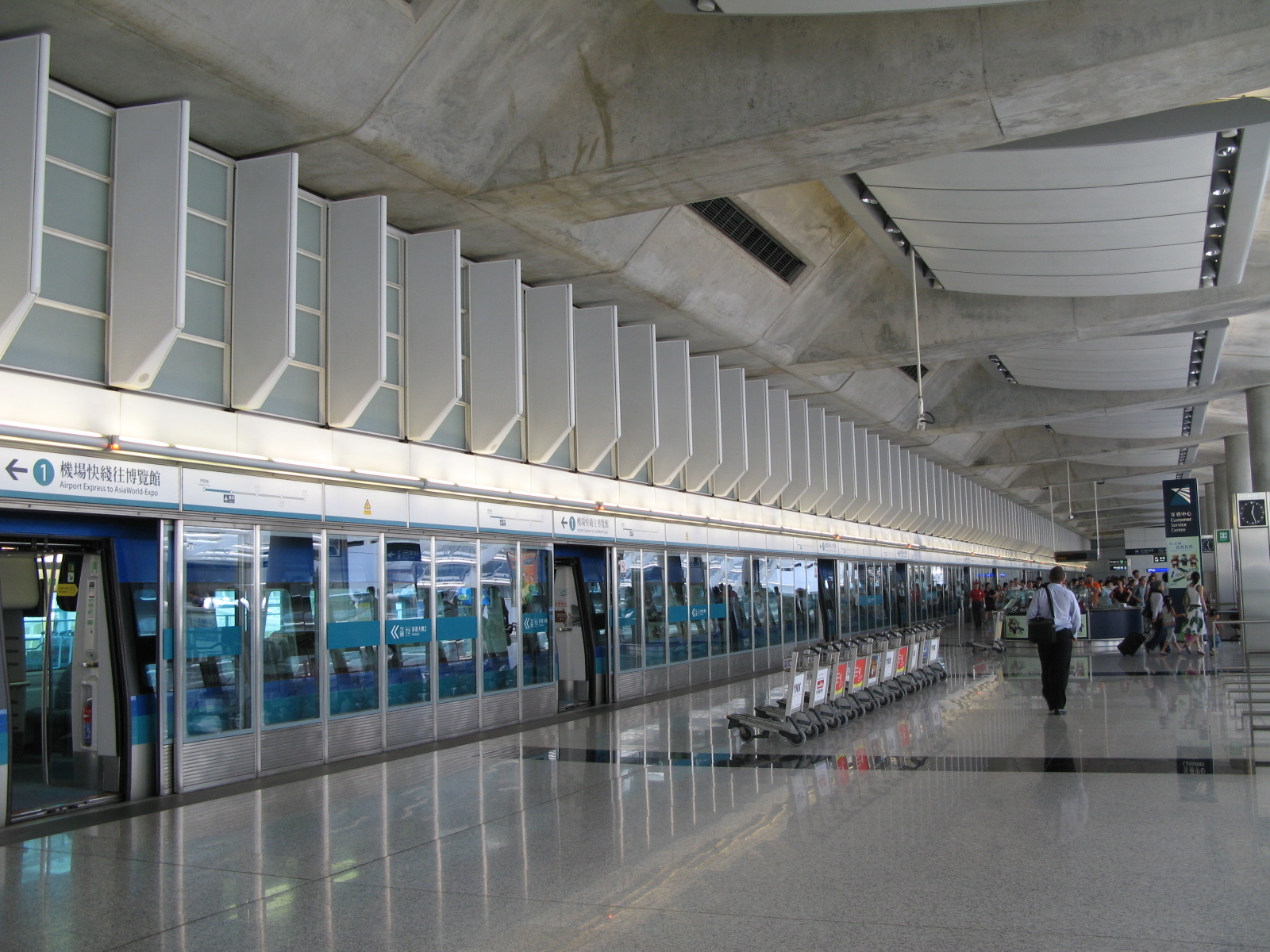
The Airport Express is the route most first time visitors should take. The station is inside the terminal, reached on foot from the arrivals hall with no outdoor walk and no weather, and the trains run about every 10 minutes from 05:54 to 00:48. The journey to Hong Kong Station in Central takes 24 minutes, to Kowloon Station about 22 minutes, and to Tsing Yi about 14 minutes, and those times do not move with traffic, weather or the time of day. In a city where a harbour tunnel queue can eat an hour, a fixed 24 minutes is worth money.
Fares, as published by the MTR: paying by Octopus, a contactless bank card or a QR ticket, a single to Hong Kong Station costs HK$120, to Kowloon Station HK$105 and to Tsing Yi HK$73. A paper smart ticket costs more, HK$130, HK$115 and HK$80 respectively, which is one more reason to sort your Octopus first. Children aged 3 to 11 travel at half fare on Octopus, and group tickets for two, three or four people travelling together cut the per person cost on the Hong Kong Station run. Same day return journeys have their own ticket offers, worth checking if you are meeting someone or doing an airport errand rather than arriving.
Which station is yours depends on the hotel. Hong Kong Station is the Central terminus, inside the IFC complex, with the Central MTR station a walkway away and the ferry piers outside: it serves Central, Sheung Wan, Admiralty and, with one MTR stop or a short taxi ride, Wan Chai and Causeway Bay. Kowloon Station serves Tsim Sha Tsui, Jordan and the West Kowloon Cultural District, and sits below the Elements mall with the high speed rail station next door. Tsing Yi is a residential stop that suits almost no visitor; stay on the train. On the way home, the line earns its fare a second time: in town check in desks at Hong Kong and Kowloon stations let passengers on selected airlines check bags in the city and ride out unencumbered, a service the train's own product pages list among its features.
Book Airport Express ticketsvia Klook · affiliate link
The Cityflyer buses: half the price, twice the time, all the view
The A routes, branded Cityflyer, are the airport's long distance buses, and they are better than the word bus suggests: luggage racks, reclining seats, and routes that thread the districts the train passes under. The two that matter most are the A11, which crosses to Hong Kong Island and runs through Central and Wan Chai to Causeway Bay and North Point, and the A21, which runs through Mong Kok and Tsim Sha Tsui to Hung Hom. Fares sit well below the train's, and for a hotel on the route itself the bus can be close to door to door, with no station change at the far end.
The cost is time and certainty. The road run crosses the Tsing Ma Bridge and the harbour tunnels, and in free flowing traffic the city centre takes around an hour; in the evening peak or behind an incident it takes longer, and nobody at the bus stop can tell you how much longer. Take the bus when you are travelling light, arriving in the middle of the day, and staying on its route. Take the train when you are tired, late, or meeting someone. The overnight N routes cover the small hours the train does not, at slower speeds and longer intervals, and are the reason a 2am arrival is an inconvenience rather than a problem.
Taxis and cars: the door to door option
Red urban taxis queue outside the arrivals hall around the clock, and for a group with luggage they are the simplest option of all: no changes, no walking, and a driver who knows the building. The meter runs on distance and time, and bridge and tunnel tolls and per piece luggage charges in the boot are added to it, so the fare to the harbour districts lands well above the train for one person and starts to make sense split three or four ways, or when the hotel is somewhere the train serves badly, such as the south side of Hong Kong Island or deep into the New Territories. Journey time is the taxi's weakness: the same road the buses use, with the same peaks. A pre booked private car removes the queue and fixes the price in advance; the train removes the traffic. Choose which problem you would rather not have.
The Tung Chung detour: the budget hack
There is a fourth way, and locals use it. A short local bus ride from the airport reaches Tung Chung, the new town at the foot of Lantau's hills, where the Tung Chung Line MTR runs into the city through Kowloon Station to Hong Kong Station. The total fare undercuts every option above, the trains are ordinary MTR services rather than the express, and the whole journey takes longer and involves a change with luggage. It suits a light packed traveller staying near a Tung Chung Line station and in no hurry, and it has one more use: Tung Chung is also the start of the Ngong Ping cable car and the buses to Tai O, so an early arrival with a late hotel check in can turn the detour into the first day out instead of a wait in a lobby.
Before you leave the terminal: Octopus and data
Two jobs belong in the arrivals hall, not the next morning. The first is an Octopus card, the stored value card that pays for the MTR, buses, trams, ferries and half the convenience stores in the city. The Airport Express fare itself is cheaper on Octopus than on a paper ticket, and every journey after it is a tap rather than a ticket queue. Cards are sold at the airport and at MTR customer service centres, a phone based Octopus can be set up in a wallet app, and the tourist version can be ordered ahead and collected at the airport with value already loaded.
Order a Tourist Octopus Card for airport pickupvia Klook · affiliate link
The second job is data. Hong Kong runs on phones: MTR apps, taxi apps, restaurant queues and the event listings on this site. A travel eSIM bought before departure or a tourist SIM from the arrivals hall counters gets you connected before the train doors close, and it is the difference between navigating and guessing on the first night.
Where to sleep, by station
Base choice follows from the arrival choice. Around Hong Kong Station, Central and Sheung Wan put business, the ferry piers and the island's restaurants at your feet, and the Peak Tram is a walk uphill. Around Kowloon Station and in Tsim Sha Tsui, the harbour view faces the other way, the museums of West Kowloon are next door, and the high speed trains to Shenzhen leave from the adjoining station. Either base makes the Airport Express the obvious run in; a south side or New Territories base is the one case where the bus or a taxi usually wins.
Stay in Hong Kongvia Trip.com · affiliate link
The short version
Train if you value the clock, and most people should: 24 minutes to Central, HK$120 on Octopus, every 10 minutes. Bus if the hotel is on its route and the day is young. Taxi if there are three of you, the bags are heavy, or the hotel is off the rail map. Tung Chung if the budget rules and the bag is light. Whichever you choose, leave the terminal with an Octopus in your pocket and data on your phone, and Hong Kong starts at the platform rather than at the hotel desk.
More reading on the articles page, or go straight to the events calendar.
Noteworthy events direct to your inbox.
Get what’s noteworthy for the weekend and beyond every Wednesday in your inbox.