
Guides · 2026年11月22日
Tai O and west Lantau: the fishing village day
Tai O, the stilt house fishing village on Lantau's western shore, is the day trip that shows the other Hong Kong: a working Tanka boat people's village of pang uk houses over the tidal channels, shrimp paste and salted fish in the market lanes, and small boats heading out to look for Chinese white dolphins. The full west Lantau day: up the Ngong Ping cable car to the Big Buddha and Po Lin Monastery first, then down by bus to Tai O for the afternoon, with the routes, the timings and the notes on what the village is and is not.
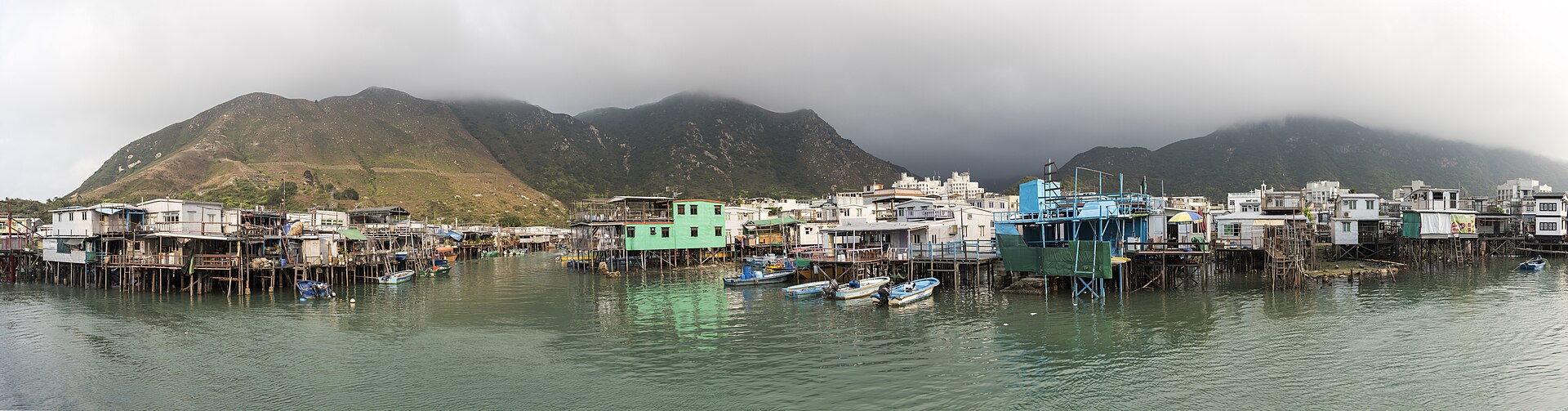
Lantau is the biggest island in Hong Kong and the least built up, and its western end holds the territory's oldest working landscape. Tai O sits where the island meets the Pearl River estuary: a fishing village built by the Tanka boat people, whose houses stand on stilts over the tidal channels because their lives were lived on the water. Around it, west Lantau stacks the Big Buddha on its plateau, the Ngong Ping cable car climbing over the hills, and some of the emptiest walking country in Hong Kong. The three belong in one day, and the order matters: the heights in the morning, the village in the afternoon, and the light going down over the estuary at the end of it. Our outlying islands overview places Tai O among the island day trips; this guide gives the west Lantau day its own full treatment.
Getting up: the cable car to Ngong Ping
Start in Tung Chung, the town at the end of the Tung Chung Line, a short walk from the station to the cable car terminal. Ngong Ping 360 runs 5.7 kilometres from Tung Chung over the Lantau hills to the Ngong Ping plateau, a ride of about 25 minutes with the airport, the bridge to Macau and the South China Sea taking turns below the cabin. Standard cabins carry most people; the Crystal cabins add a glass floor, which is either the point of the ride or a reason to look at the horizon, depending on the traveller. The cable car runs from 10 in the morning to 6 in the evening on weekdays and from 9 in the morning to 6:30 in the evening on weekends and public holidays, and it stops for maintenance and for high winds, so check the operator's notices on the morning of the trip rather than the night before.
At the top, Ngong Ping Village is a built for visitors street of shops and cafes that takes five minutes to walk through and should take exactly that. Beyond it stands the day's first real sight. The Tian Tan Buddha, the Big Buddha, sits on its hill above Po Lin Monastery at 34 metres tall, reached by a staircase of 268 steps that every tour group in Hong Kong climbs at the same pace: slow, with stops. Go early and the plateau is quiet enough to hear the monastery. Po Lin itself is a working Buddhist monastery, founded in the hills long before the cable car, with its grand hall, its vegetarian restaurant and a calm that the village street below works hard to interrupt. Give the plateau an unhurried hour and a half, add the Wisdom Path if the day allows, a short walk from the monastery to a hillside of tall wooden poles inscribed with calligraphy, standing in open country with Lantau Peak above.
Book Ngong Ping 360 cable car ticketsvia Klook · affiliate link
Down to Tai O: the village on stilts
From Ngong Ping, bus 21 drops down the island's western flank to Tai O in about 20 minutes. The alternative approaches explain the village's character: bus 11 from Tung Chung takes about 50 minutes around the island's south coast road, and bus 1 from Mui Wo, reached by ferry from Central, crosses from the east. Every route ends at the same small bus terminus, and from there Tai O is walked, because there is nothing else to ride.
The village divides at its channel. On the near bank, the market lanes of Wing On Street and Kat Hing Street sell what Tai O has always sold: shrimp paste and shrimp sauce, salted fish drying in the sun, dried seafood of every description, and the village's famous giant fish balls and tofu pudding for the day trip crowds. Cross the bridge and the stilt houses begin. The pang uk are homes, not exhibits: narrow houses of wood and tin standing on poles over the mud and water, joined by walkways, with boats tied below and washing above, built by Tanka families who historically lived on their boats and came ashore only gradually. Walk the channels slowly, photograph from the public paths, and remember that the line between sightseeing and staring into someone's kitchen is one the visitor chooses to respect.
At the village's edge, the former Tai O Police Station, a colonial outpost on the headland, has been restored as the Tai O Heritage Hotel, and its terrace is the village's best seat at the end of the day. The walk out to it, past the salt pans and the mangroves, is the quietest half hour of the trip.
The dolphin boats
Small boats tout from the waterfront near the bridge for short trips out into the estuary, part village tour from the water, part dolphin watch. The Chinese white dolphin, pink as an adult, lives in the Pearl River estuary waters off west Lantau, and Tai O is the traditional place to look for it. The plain version: the boats are cheap, the run through the stilt house channels is worth the fare on its own, and dolphins are wild animals on their own schedule. Sightings happen, often enough that the boats keep sailing, and they are never guaranteed, whatever the tout's board says. Treat a dolphin as a gift the day gives you, not a product you bought, and the trip cannot disappoint. The Agriculture, Fisheries and Conservation Department, which protects the species, asks boats to keep their distance and cut speed near dolphins; a boat that chases is a boat to walk away from.
The day, timed
The west Lantau day runs best in one direction. Tung Chung by MTR in the morning, the first cable cars up, the Buddha and the monastery before the plateau fills, bus 21 down to Tai O by early afternoon, the market lanes and a late lunch of seafood or village snacks, the stilt house channels in the softening light, a dolphin boat if the water is calm, and the headland walk to finish. Home runs two ways: bus 11 back to Tung Chung and the MTR, or, for the full island loop, bus 1 to Mui Wo and the ferry to Central, arriving on the harbour at night. What not to do is reverse the order: Tai O first means climbing to a crowded Buddha at midday and rushing the village, which is the half of the day that cannot be hurried.
One timing note that catches people out: the plateau and the village keep different clocks. The cable car's last descent and the village's last useful buses both fall in the early evening, and Tai O empties as the light goes, its restaurants serving the day boats rather than a dinner crowd. Eat your main meal in the village at lunch or in the middle of the afternoon, not on a plan to dine there at eight, and build the home run backwards from the last cable car if the cable car is how you came up. The day rewards an early start and forgives almost everything else.
If you would rather hand the logistics to someone else, the guided version of this exact day exists in a small group format: cable car, Big Buddha and Po Lin Monastery, then Tai O with a boat ride around the stilt houses, meeting at Tung Chung and travelling by air-conditioned vehicle, with no shopping stops built in.
Book the small group Lantau tour: Big Buddha and Tai Ovia Viator · affiliate link
The short version
Cable car up in the morning while the plateau is quiet, 268 steps to a 34 metre Buddha, the monastery's calm, then bus 21 down to a village that still works for a living. Eat in the market lanes, walk the stilt channels gently, take the dolphin boat for the water level view and count any dolphin as luck. West Lantau is the Hong Kong that existed before the skyline, and it is still there, an MTR ride and a cable car from Central.
值得注目的活動,直接送到你的信箱。
每週三,把週末及之後值得注目的活動,直接送到你的信箱。