
Guides · 2026年11月16日
The Hong Kong food trail: cha chaan teng, dai pai dong and the queues worth joining
Hong Kong does not hide its best food in expensive rooms. It serves it in diners where the milk tea arrives before you have finished ordering, at open air stalls cooking over fierce wok flames, and on streets where the queue outside is the review. A neighbourhood by neighbourhood trail through the cha chaan tengs, dai pai dongs and snack streets of Central, Sham Shui Po, Jordan, Yau Ma Tei and Mong Kok: what to order at each stop, which queues move fast and are worth joining, and which ones to walk past.
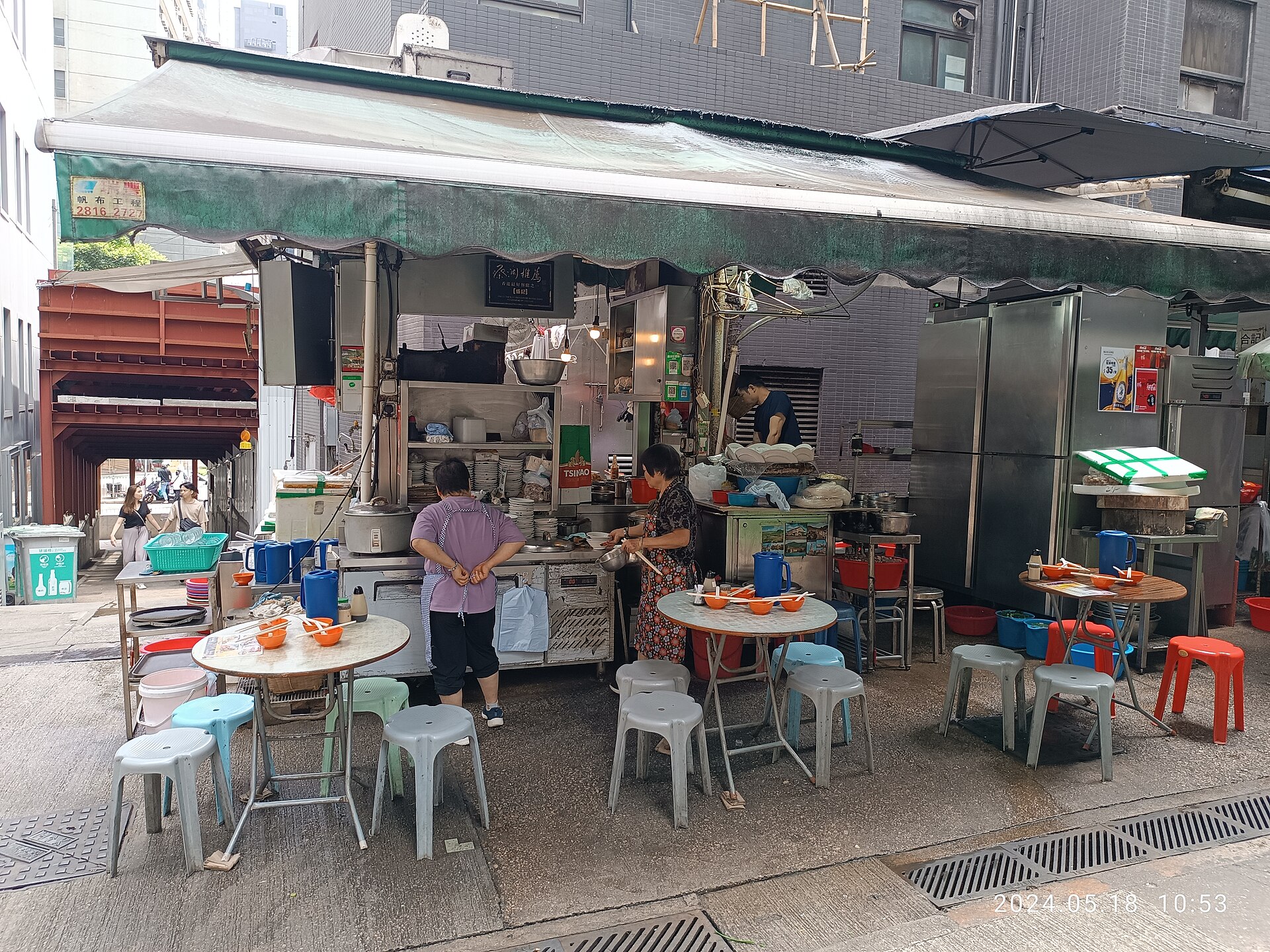
Every city has a food scene; Hong Kong has a food system, and it runs on three institutions. The cha chaan teng, the Hong Kong style diner, feeds the city from breakfast to late night on milk tea, baked rice and toast in a dozen forms. The dai pai dong, the open air cooked food stall, cooks Cantonese classics over serious heat at folding tables. And the snack street fills the gaps between meals with cheung fun, fish balls and egg waffles eaten standing up. None of it requires a reservation, most of it requires a queue, and the whole trail fits inside a few MTR stops on either side of the harbour. This guide walks it neighbourhood by neighbourhood, and names the stops that earn their lines. For the sit down opposite of all this, the city's hotel buffets, see our Hong Kong buffet guide.
First, learn the two rooms
A cha chaan teng grew out of the bing sut, the ice rooms that served cold drinks and simple western style snacks, and the Hong Kong Tourism Board describes the result as an East meets West food culture all of its own. The menu is a beautiful collision: milk tea strained strong and silky, pineapple buns with a cracked sweet crust and no pineapple in them, macaroni in soup with ham, baked pork chop rice, French toast fried and served with butter and syrup. Service is fast because the room is built for turnover. You will share a table at busy times, your order will be taken within moments, and lingering is not part of the design. Order the set if there is one; it is what the regulars eat.
A dai pai dong is the older, louder institution: an open air stall, historically green painted steel, with a wok station, round folding tables and no air conditioning. The government stopped issuing new dai pai dong licences decades ago, so the surviving stalls, a small and shrinking number, are heritage you can eat at. What they cook is wok hei food, dishes that need the breath of the wok: salt and pepper squid, beef chow fun with its smoky edges, clams in black bean sauce. The cooked food centres on the upper floors of municipal market buildings are the dai pai dong's indoor cousins, and much of what travels under the name now cooks in them. Between the two rooms sits the street snack, bought from a hatch and eaten on the pavement: rice rolls slicked with sweet sauce and sesame, curry fish balls on a skewer, siu mai, egg waffles puffed into bubbles. That is the whole system. Now walk it.
Central and Sheung Wan: milk tea where it was invented
Start on Hong Kong Island, where the trail has a birthplace. Lan Fong Yuen on Gage Street in Central began as a dai pai dong before it became a diner, and its fame rests on one drink: silk stocking milk tea, tea strained repeatedly through a cloth bag until it pours smooth, the standard against which the city's milk tea is still judged. The queue is for the tea and the pork chop bun, and it moves the way Central queues move, with intent. A few streets away on Mee Lun Street, Sing Heung Yuen is one of the city's best loved surviving dai pai dongs, an open air stall where the order is tomato soup with macaroni or noodles, a beef and egg sandwich, and the crispy bun with butter and lemon honey that regulars finish with. Expect to share a table, expect the food to land fast, and expect to understand the institution within one bowl.
Central also teaches the dai pai dong lunch. Along Stanley Street, the open air stalls serve the office district at full volume at midday, workers at folding tables eating noodle soups and rice plates cooked to order metres away; the hero photograph above is that Stanley Street row. Go at noon on a weekday for the full performance, or after 13:30 when the rush breaks. Round the Island leg off with roast meats and an egg tart. Central's roast goose institutions serve goose over lai fun noodles in rich broth, and the old bakeries sell egg tarts in two schools, flaky puff pastry and crumbly shortcrust; the only correct approach is one of each, eaten warm.
Sham Shui Po: the connoisseur's district
Cross the harbour to the district food lovers argue about most happily. Sham Shui Po is a working neighbourhood of fabric shops and electronics stalls, and its eating is the city's most local. Oi Man Sang, on Shek Kip Mei Street, has cooked as a dai pai dong since 1956 and is one of the last of the original street stalls: the wok work is the point here, salt and pepper squid, typhoon shelter style dishes and greens blistered with heat, eaten at outdoor tables. It is the single best place on this trail to understand what wok hei means, and the evening queue of locals is the only review it needs.
The district's gentler glories are a short walk apart. Kung Wo Beancurd Factory serves tofu pudding of legendary smoothness and fresh soy milk. Hop Yik Tai's cheung fun, rice rolls made to order and dressed with sweet sauce, soy and sesame, draws a standing queue and a Michelin Guide recommendation. And the neighbourhood cafes around Castle Peak Road serve the egg tart in its puff pastry form, dozens of shattering layers around a just set custard; the Taste Hong Kong guide, the Tourism Board's chef curated collection, sends people here for exactly this. Graze rather than feast: three small stops beat one big one.
Jordan and Yau Ma Tei: the breakfast queue and the night shift
Jordan holds the most famous queue on the trail. Australia Dairy Company, at 47 to 49 Parkes Street, has served the same breakfast since 1970: scrambled eggs of improbable silkiness on toast, steamed milk, macaroni soup, milk tea. The line outside looks like a warning and behaves like a promise, because the room turns tables faster than anywhere in Hong Kong; you queue, you are seated with strangers, you order the set, you eat superbly, you leave. Listings show it closed on Thursdays, so check the day first.
Yau Ma Tei, one stop north, runs the night shift. On Temple Street, Mido Cafe has stood since 1950, its mosaic floors and old ceiling fans intact, serving the diner menu to a late crowd. After dark the street itself becomes the restaurant row: the night market sets up along Temple Street, and the eating is claypot rice cooked over fierce heat until the bottom crisps, dai pai dong seafood around the Woosung Street cooked food bazaar, fish balls and siu mai from the stalls near the Jordan Road archway, and fortune tellers between the tables. Order claypot rice early in the evening if you hate waiting; the pots take time by design, and the whole street orders them at once at 20:00.
Mong Kok: snack streets and the pineapple bun benchmark
Mong Kok is where the trail becomes a graze. The district around the Ladies Market on Tung Choi Street and the snack lanes off Dundas Street runs on standing food: curry fish balls, siu mai on skewers, grilled squid, egg waffles, stinky tofu for the brave, all eaten within metres of the stall that cooked it. The rule in Mong Kok is one item per stall and keep moving; the second rule is to finish with something baked. Kam Wah Cafe, on Bute Street, is the city's pineapple bun benchmark, serving the bun warm with a thick slab of cold butter wedged inside, the form the rest of Hong Kong is measured against. Wonton noodles are the district's sit down course: small bowls, springy noodles, wontons with a real prawn bite, eaten in ten minutes.
The trail is a lot to run alone on a first visit, which is why the guided version of its Kowloon half is this site's food tour pick: a small group Kowloon street food tour that starts in Sham Shui Po in the afternoon and eats its way through Mong Kok to Yau Ma Tei, with seven to nine tastings, Michelin recommended and Bib Gourmand stops along the route, and a guide who orders for you.
Book a small group Kowloon street food tourvia Viator · affiliate link
The rules of the trail
Four habits will feed you better than any list. Carry cash in small notes; the oldest rooms and stalls are the least card friendly. Learn the shared table without fear: a seat is a seat, nobody minds. Order the thing the room is famous for, not the thing you always eat; a dai pai dong's beef chow fun and a cha chaan teng's set breakfast are famous because thousands of regulars audited them before you. And time the queues rather than avoiding them: before 09:00 for the breakfast institutions, after the 13:00 peak for the lunch stalls, before 19:00 for Temple Street claypots. A queue in Hong Kong is information. The longest ones, at the places above, are telling the truth.
Where to sleep
Eat where the trail runs and sleep where it ends. Staying in Jordan or Yau Ma Tei puts the breakfast queue, Temple Street and the MTR in one walkable pocket, with Mong Kok one stop north. Staying in Central or Sheung Wan trades that for the Island's milk tea mornings and the Stanley Street lunch performance. Either base runs the whole trail with nothing more complicated than an Octopus card.
Stay in Hong Kongvia Trip.com · affiliate link
The short version
One perfect food day, if a day is what you have: scrambled eggs at Australia Dairy Company before the queue peaks, the MTR to Central for silk stocking milk tea and a Stanley Street dai pai dong lunch, Sham Shui Po in the afternoon for beancurd, cheung fun and a puff pastry egg tart, and Temple Street after dark for claypot rice with the crust scraped up at the end. Hong Kong will feed you at every price in the world. This trail is the one the city feeds itself on. For the next day out, our outlying islands day trips guide walks the ferries to Cheung Chau, Lamma and Tai O.
值得注目的活動,直接送到你的信箱。
每週三,把週末及之後值得注目的活動,直接送到你的信箱。